
Why a 50-Year Mortgage Isn’t the Breakthrough It Sounds Like
Homeownership once a cornerstone of the American Dream feels like it’s slipping further out of reach. Home prices have surged to astronomical levels, and when you combine that with today’s elevated interest rates, the path to owning a home can feel nearly impossible for many families.
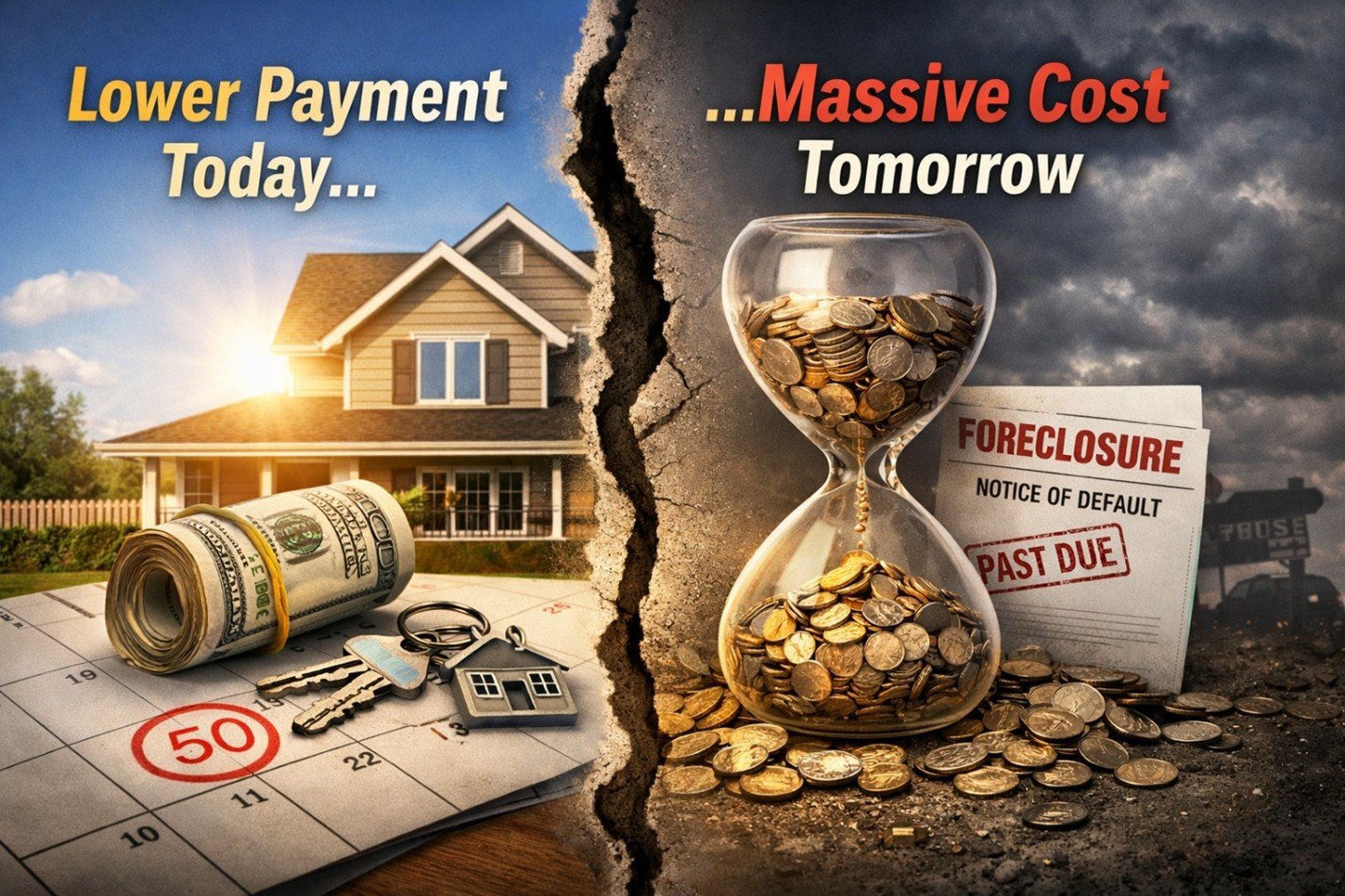
Affordability has become so strained that solutions being discussed today would have sounded unthinkable just a decade ago. One proposal that has been floated is the 50-year mortgage.
At first glance, stretching a loan over 50 years sounds like it could meaningfully lower monthly payments and make homeownership more accessible. But beneath the surface, there are serious trade-offs. And when you run even a simple scenario, it becomes clear that these loans aren’t quite the breakthrough they’re made out to be.
Contents
What is a 50-year mortgage?
A 50-year mortgage isn’t a radical departure from the traditional 15- or 30-year mortgage. The primary difference is simply the length of the repayment term, which is fairly self-explanatory.
A 50-year mortgage spreads the loan over 50 years, while a 15-year mortgage runs 15 years, and a 30-year mortgage runs 30 years. In each case, borrowers make monthly payments consisting of principal and interest.
With shorter loan terms, monthly payments are higher because the principal is repaid more quickly. With a 50-year loan, the repayment is stretched over a much longer period, which reduces the required monthly payment and makes the home appear more “affordable.”
But just because the payment is lower does not mean the home itself is more affordable.
The Marketing Angle vs Reality
Supporters of longer-term mortgages often highlight three main benefits:
- Lower monthly payments
- More cash flow each month
- The ability to refinance later when income increases
On the surface, that sounds appealing.
The problem? The long-term cost is enormous.
Over the life of the loan, you could pay hundreds of thousands of dollars more in interest compared to a traditional 30-year mortgage. At the same time, equity builds at a painfully slow pace because a larger portion of each payment goes toward interest rather than principal.
And don’t overlook the psychological cost: you’re committing to 20 additional years of debt.
If you purchase a home at age 30 with a 50-year mortgage, you won’t pay it off until you’re 80.
The Real Cost: 20 Extra Years of Interest
Let’s break down a real example.
Assumptions:
- Purchase price: $400,000
- Down payment: 20% ($80,000)
- Loan amount: $320,000
- Interest rate: 6% per mortgage news daily that was the interest rate as of 2/20/26.
| 30-year Mortgage |
50-year Mortgage |
| Monthly payment = 1919 (P &I only)* | Monthly payment = 1,684 (P &I only)* |
| Total Interest Paid = 370,682 | Total Interest Paid = 690,697 |
| Total Paid = 906,682 | Total Paid = 1,370,697 |
Yes, the 50-year mortgage lowers the monthly payment by about $235.
But that $235 in monthly relief comes at a cost of approximately $320,015 more in interest over the life of the loan.
That’s not a small tradeoff. That’s a massive wealth transfer to the bank.
It’s also important to note that this comparison assumes the same 6% interest rate for both loans. In reality, longer-term loans typically carry higher interest rates to compensate lenders for the additional risk and extended repayment period.
If a true 50-year fixed mortgage were widely available today, it would likely come with a higher rate, which would further increase both the monthly payment and the total interest paid.
In most scenarios, the primary beneficiary of a 50-year loan is the lender.
When does a 50-year mortgage make sense
To be fair, there are niche scenarios where it could make sense:
- A short-term owner who does not plan to keep the loan long-term
- An investor optimizing for cash flow
- A borrower with a clear, realistic plan to refinance soon
But these situations are exceptions, not the rule.
For the majority of traditional home buyers, this structure significantly slows wealth building.
Better alternatives to home buying than entering 50-year mortgage
If affordability is tight, there are smarter options than doubling down on loan length.
1. Buy Less House
In America, we often gravitate toward larger homes than we truly need. Ask yourself honestly: how much of your home do you actively use at one time? Smaller homes mean smaller loans, and smaller financial stress.
2. Increase Your Down Payment
The less you borrow, the lower your monthly payment and total interest paid. Even an extra 5% down can meaningfully change your long-term costs.
3. Improve Your Credit Score
Higher credit scores typically qualify for lower interest rates. Even a modest rate improvement can save tens of thousands over time.
4. Consider House Hacking
Buying a home and renting out a room or portion of the property can help offset the mortgage payment and improve cash flow without extending the loan to 50 years.
Final Verdict on the 50-year Mortgage
A lower monthly payment is tempting. But in this case, the monthly savings are relatively small compared to the staggering increase in lifetime interest costs.
For most buyers, a traditional 15- or 30-year mortgage is a far stronger wealth-building tool.
If it takes 50 years to afford the home, the real issue may not be the loan term, it may be the price of the house.
Stretching debt rarely creates wealth. Owning your home faster does.
About the writer: Sean writes about practical strategies to build wealth and simplify money decisions at Simplifying Personal Finance or on X. He focuses on long-term wealth building, financial goal setting, paying down debt, and couples finances.


